Elizabeth Fraley: The Ultimate Kindergarten Readiness Checklist for Parents
The Ultimate Kindergarten Readiness Checklist for Parents By Elizabeth Fraley
Starting kindergarten is one of the most important milestones in a child’s early education. While every child develops at their own pace, many parents want to know if their child has the skills needed to succeed in their first classroom experience.
Kindergarten readiness involves more than knowing letters and numbers. It includes social development, emotional confidence, independence, and the ability to follow routines.
Early education specialists such as Elizabeth Fraley have helped many families prepare their children through programs at Kinder Ready INC. These programs focus on helping children develop the balanced skills necessary for a smooth transition into school.
This checklist can help parents evaluate whether their child is ready for kindergarten.
Academic Skills Checklist
Academic readiness does not mean children must master advanced reading or math before kindergarten. However, basic familiarity with early learning concepts helps children feel comfortable participating in classroom activities.
Children entering kindergarten often demonstrate the ability to:
Recognize Letters
Identify most uppercase letters
Recognize some lowercase letters
Associate letters with basic sounds
Understand Numbers
Count to at least 10
Recognize basic numbers
Understand simple concepts like more and less
Show Interest in Books
Listen to short stories
Turn pages in a book
Identify pictures and characters
Understand Basic Shapes and Colors
Recognize shapes like circles, squares, and triangles
Identify common colors
These foundational skills support early literacy and math development during the kindergarten year.
Social Skills Checklist
Kindergarten classrooms are social environments where children interact with peers and teachers throughout the day.
Parents may observe whether their child can:
Share toys or materials
Take turns during games
Play cooperatively with other children
Express feelings using words
Participate in group activities
Children who practice these skills often find it easier to build friendships and adjust to classroom routines.
Educators like Elizabeth Fraley frequently incorporate social learning into kindergarten readiness programs.
Communication Skills Checklist
Communication is essential for learning and interaction in school.
Before starting kindergarten, children typically can:
Speak in simple sentences
Ask questions when curious
Describe basic experiences
Follow simple conversations
Clear communication helps teachers understand children’s needs and encourages active participation during lessons.
Independence Skills Checklist
Kindergarten encourages children to perform many daily tasks on their own. Developing independence can increase confidence and reduce stress during the school day.
Children benefit from being able to:
Put on jackets and shoes
Wash hands independently
Use the restroom without assistance
Open lunch containers
Clean up toys or materials after activities
Practicing these skills at home can make classroom routines easier to manage.
Emotional Readiness Checklist
Emotional readiness is often overlooked but plays a major role in school success.
Children entering kindergarten should begin learning how to:
Manage small frustrations
Try again after making mistakes
Adapt to new environments
Separate from parents comfortably
Confidence and emotional resilience help children navigate challenges and develop a positive attitude toward learning.
Programs developed through Kinder Ready INC often focus on building emotional confidence alongside academic skills.
Attention and Learning Habits Checklist
Kindergarten introduces structured learning periods where children must focus and follow instructions.
Helpful learning habits include:
Listening to teachers during instructions
Completing short activities
Sitting for several minutes during lessons
Participating in group discussions
Developing these habits early can help children feel more comfortable in a classroom setting.
Fine Motor Skills Checklist
Fine motor development supports writing, drawing, and other classroom tasks.
Before kindergarten, children often practice:
Holding crayons or pencils
Drawing simple shapes
Cutting paper with child-safe scissors
Completing puzzles
Building with small objects like blocks
These activities strengthen hand coordination and control.
Signs Your Child May Benefit from Extra Preparation
If your child struggles with several areas on this checklist, additional preparation may be helpful.
Some parents choose structured learning programs or tutoring to strengthen skills before kindergarten begins.
Individualized instruction can help children build confidence and practice skills in a supportive environment.
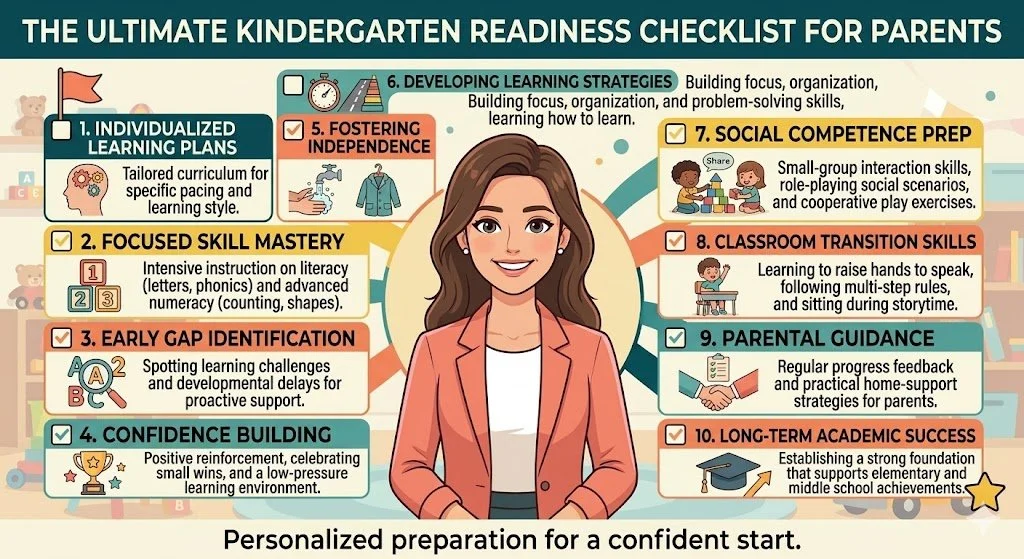
Every child’s journey is unique, but thoughtful preparation can create a strong foundation for lifelong learning.
How Parents Can Support Kindergarten Readiness
Parents play a powerful role in preparing children for school.
Helpful strategies include:
Reading together daily
Encouraging creative play
Practicing counting during everyday activities
Setting simple routines for learning and play
Encouraging curiosity and questions
These small daily habits can significantly strengthen a child’s readiness for school.
Final Thoughts
Kindergarten readiness is about helping children develop the skills and confidence needed to thrive in their first classroom experience.
By focusing on academic basics, social development, independence, and emotional confidence, parents can help children begin school feeling prepared and excited to learn.
Every child’s journey is unique, but thoughtful preparation can create a strong foundation for lifelong learning.