Elizabeth Fraley With 10 Skills Every Child Should Master Before Kindergarten
Elizabeth Fraley’s Programs like these offered through Kinder Ready INC demonstrate how thoughtful early education support can empower young learners as they begin their educational journey.
The transition to kindergarten is an exciting milestone for children and parents alike. However, many families wonder what skills their child should have before entering the classroom.
Kindergarten readiness is not about perfection or academic pressure. Instead, it focuses on developing the foundational abilities that help children learn, interact, and adapt in a school environment.
Early childhood educators like Elizabeth Fraley, founder of Kinder Ready INC, emphasize that kindergarten success depends on a balance of academic knowledge, social development, and independence.
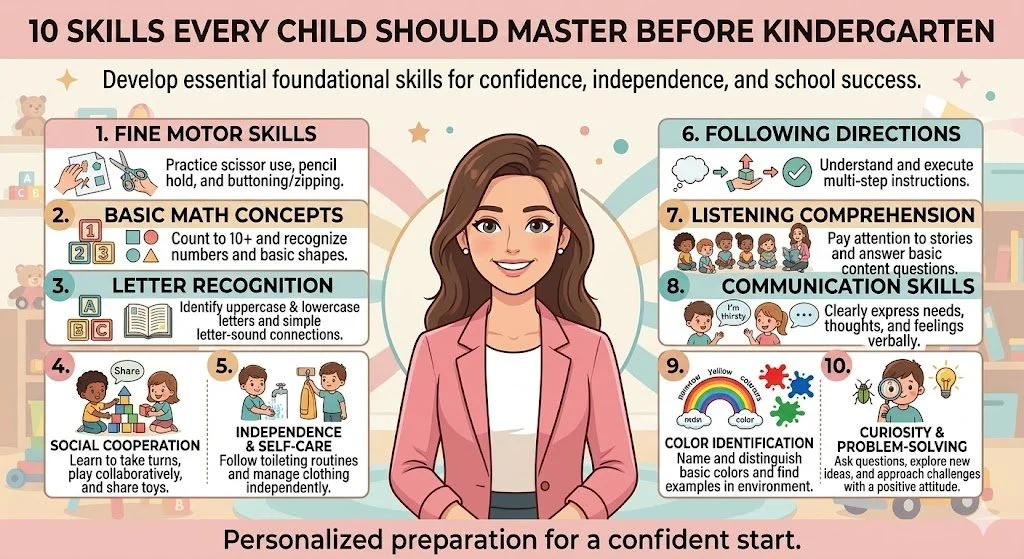
Here are ten essential skills that help children start kindergarten with confidence.
1. Recognizing Letters of the Alphabet
Children entering kindergarten should have basic familiarity with letters. They do not need to read fluently, but recognizing most letters of the alphabet provides a strong starting point.
Important early literacy abilities include:
Identifying uppercase and lowercase letters
Associating letters with sounds
Showing interest in books and stories
These skills help children transition smoothly into early reading lessons once school begins.
2. Understanding Basic Numbers
Early math skills help children develop logical thinking and problem-solving abilities.
Before kindergarten, many children can:
Count to 10 or higher
Recognize basic numbers
Understand simple quantities (more or less)
Activities like counting toys, snacks, or steps during walks can make learning numbers natural and engaging.
3. Listening and Following Instructions
Kindergarten classrooms require children to follow directions from teachers throughout the day.
Children should practice:
Listening carefully to instructions
Completing simple two-step directions
Waiting for their turn during activities
This skill helps children participate more comfortably in structured classroom environments.
4. Communicating Needs and Ideas
Strong communication skills allow children to express themselves clearly.
Before starting kindergarten, children should be able to:
Speak in simple sentences
Ask for help when needed
Share thoughts and ideas during conversations
Communication helps teachers understand children's needs and encourages participation in class discussions.
5. Social Interaction with Other Children
Kindergarten introduces children to a larger social environment where cooperation is essential.
Important social skills include:
Sharing materials
Taking turns
Playing cooperatively
Respecting personal space
Children who practice these behaviors often adapt more easily to group learning situations.
Educators like Elizabeth Fraley frequently incorporate guided social learning into early education preparation.
6. Basic Fine Motor Skills
Fine motor development is essential for classroom activities such as writing, drawing, and crafts.
Before kindergarten, children benefit from practicing:
Holding crayons or pencils
Cutting with safety scissors
Coloring within shapes
Manipulating small objects
These activities strengthen the hand muscles needed for writing and other tasks.
7. Independence in Daily Tasks
Kindergarten encourages children to take responsibility for small personal tasks.
Helpful independence skills include:
Putting on shoes and jackets
Opening lunch containers
Cleaning up toys or materials
Using the restroom independently
Developing independence helps children feel confident and capable in a classroom setting.
8. Curiosity and Interest in Learning
One of the most important traits for school success is curiosity.
Children who ask questions, explore new ideas, and show enthusiasm for learning tend to engage more actively in classroom activities.
Parents and educators can encourage curiosity by:
Reading together daily
Exploring nature
Asking open-ended questions
Encouraging creative play
Programs designed by experts at Kinder Ready INC often prioritize nurturing curiosity alongside academic development.
9. Ability to Focus for Short Periods
While kindergarteners are not expected to concentrate for long periods, they should be able to focus on a task for several minutes.
Practice activities may include:
Listening to short stories
Completing puzzles
Participating in art projects
Playing simple educational games
These exercises help children build attention and patience.
10. Emotional Readiness and Confidence
Emotional readiness is just as important as academic preparation.
Children entering kindergarten benefit from learning how to:
Manage frustration
Ask for help
Try new activities
Adapt to new environments
Confidence grows when children experience small successes and feel supported during challenges.
One-on-one learning programs, such as those developed by Elizabeth Fraley, often help children build this emotional resilience before starting school.
Why Kindergarten Readiness Matters
Kindergarten is often a child's first experience in a structured learning environment. When children arrive prepared with foundational skills, they tend to feel more comfortable and capable.
Benefits of kindergarten readiness include:
Increased confidence in the classroom
Greater participation in activities
Improved relationships with teachers and peers
Stronger academic progress during the school year
Early preparation can make the transition into school smoother for both children and parents.
Final Thoughts
Every child develops at a different pace, and there is no single timeline for mastering kindergarten readiness skills. However, helping children build foundational abilities before school begins can make a significant difference.
Through supportive learning experiences, encouragement, and structured preparation, children can develop the academic, social, and emotional skills needed to thrive in kindergarten.
Programs like those offered through Kinder Ready INC demonstrate how thoughtful early education support can empower young learners as they begin their educational journey.